
Pakistan's ready-to-wear category for men has grown quickly over the last few years, but genuine buying guidance has not kept pace. Most men still shop stitched menswear the same way they shopped ten years ago, picking a size off a rack and hoping for the best. This guide breaks down every major piece in the men's stitched range, how each one fits, when to wear it, and how to actually get sizing right when you are buying online.
1. Why Stitched Menswear Is Becoming the First Choice for Busy Pakistani Men
The appeal of stitched menswear comes down to one word: time. Getting a suit tailored from scratch means multiple visits, waiting for fittings, and often a delivery date that slips past the occasion it was meant for. Stitched menswear removes almost all of that friction.
A well-made stitched kurta or shalwar kameez, produced with standardised sizing and consistent quality control, is ready to wear the same day it is bought. For a professional managing a full week of work, or a man planning a same-week wedding function, this convenience matters as much as the fit itself.
There is also a quality argument that often gets overlooked. Brands producing RTW menswear at scale can invest in better stitching machinery, consistent fabric sourcing, and quality checks that an individual tailor working on a single piece may not always match. This is part of why more Pakistani men are shifting toward trusted stitched collections rather than starting every outfit from unstitched fabric.
None of this means unstitched fabric has lost its place. It simply means stitched menswear has earned its own space for men who want reliable quality without the wait.
2. Men Kurta: Styles, Fabrics and Occasions Explained Properly
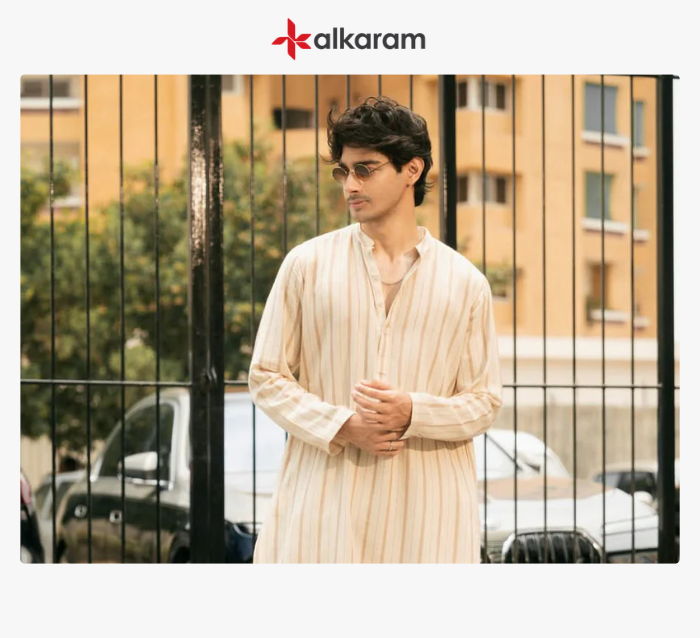
The men kurta is the single most versatile piece in a Pakistani man's wardrobe, and understanding its variations makes shopping far easier.
Straight cut kurta. The most traditional silhouette, falling straight from the shoulder without tapering at the waist. This style suits almost every body type and works equally well for daily wear and semi-formal events.
A-line kurta. Slightly fitted through the chest and flaring gently toward the hem. This cut tends to suit taller men particularly well and gives a more contemporary silhouette than the classic straight cut.
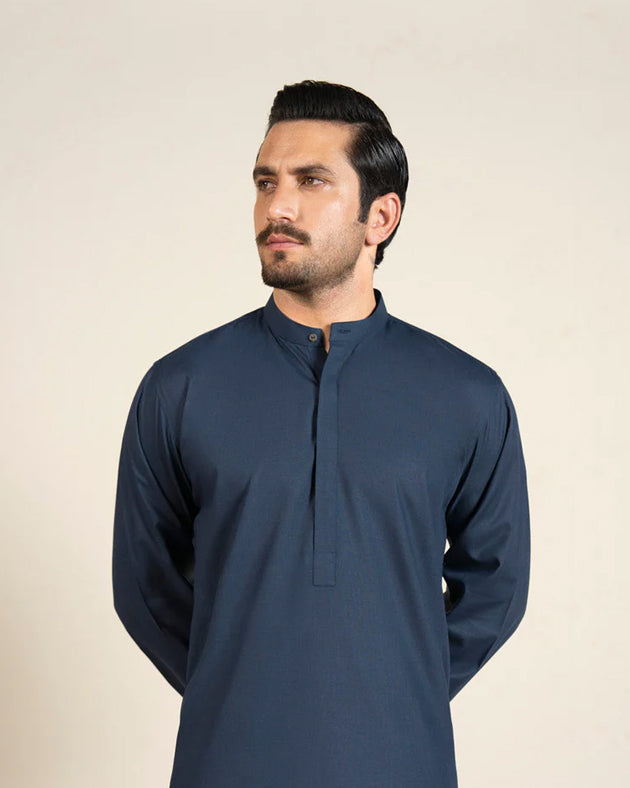
Collar variations. A men kurta can come with a band collar, a mandarin collar, or no collar at all, sometimes referred to as a round neck. Band collar kurtas read as slightly more formal and are a strong choice for Eid or festive events, while collarless kurtas lean more casual.
Fabric choice by season. Pure cotton kurtas remain the most practical choice for Pakistan's summers, while heavier cotton blends or wash and wear fabric are better suited to winter and formal indoor events.
Occasion mapping. A plain cotton kurta in a neutral shade works for the office and Friday prayers. A textured or lightly embroidered kurta moves the same piece into semi-formal territory, suitable for smaller family gatherings or casual Eid visits.
3. Kurta Trouser: When This Combination Works and How to Wear It Right
The kurta trouser combination has become one of the most requested looks in Pakistani men's fashion over the last few seasons, and for good reason. It offers the comfort and cultural familiarity of a kurta with a slightly more modern, structured finish than a traditional shalwar.
When kurta trouser works best. This combination is particularly suited to semi-formal and smart-casual occasions, engagement functions, mehndi events, and evening family gatherings where a full formal suit would feel excessive but a plain kurta alone would feel underdressed.
Getting the proportions right. The kurta length matters more in this pairing than in a traditional shalwar kameez. A kurta that falls just above or at mid-thigh generally pairs best with a tailored trouser, since anything longer starts to visually overwhelm the trouser silhouette.
Trouser fit. A slim or straight-cut trouser, rather than a baggy one, is what makes this combination look intentional rather than mismatched. Pleated trousers can work for a slightly more formal finish, while flat-front trousers give a cleaner, more contemporary look.
Footwear pairing. Kurta trouser looks pair naturally with loafers or khussa, both of which complement the more tailored silhouette better than traditional sandals.
This combination has essentially become the modern middle ground between a full stitched shalwar kameez and Western formal wear, and it continues to gain ground at Pakistani weddings and festive events.
4. Stitched Kurta Quality Guide: What Separates a Good Stitch from a Poor One
Not every stitched kurta on the market is built the same way, and a few quality checks can save you from a piece that looks fine on a hanger but falls apart after a few wears.
Check the seam finishing. Turn the kurta inside out and look at the seams around the sleeves, collar, and side slits. Clean, tightly stitched seams with no loose or uneven threads indicate careful construction. Frayed or exposed raw edges are an early sign of a lower quality build.
Check the collar and placket stitching. These are the highest-stress areas on a kurta and the first places poor stitching tends to show. The collar should sit flat without puckering, and the button placket should be reinforced, not just single-stitched.
Check button quality and attachment. Buttons should be securely attached with reinforced thread, not a single loose stitch that will come loose within a few washes.
Check fabric weight consistency. Run your hand across the full kurta. Good quality stitched pieces use fabric of consistent weight and weave throughout, with no thin or uneven patches, particularly around the side slits and hem.
Check the hem finish. A properly finished hem is folded and stitched flat, not simply overlocked, which tends to fray and curl after repeated washing.
A well-constructed stitched kurta should hold its shape, colour, and stitching integrity through dozens of washes. These small construction details are usually the real difference between pieces at different price points, more so than the printed design itself.
5. Men Shalwar Kameez: The RTW Option That Requires the Most Careful Sizing
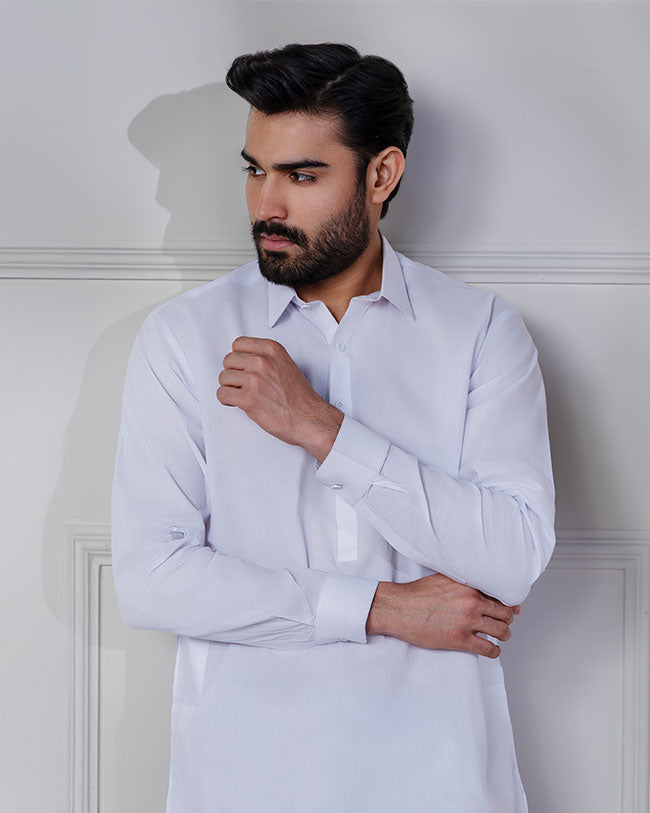
Of all the pieces in a men's stitched range, men shalwar kameez is the one where sizing mistakes happen most often, largely because the shalwar itself has more variables than a simple trouser.
Waist fit matters most. Unlike a fitted trouser, a shalwar's waist is typically adjustable with a drawstring, which gives some flexibility, but the kameez length and shoulder width are fixed once stitched and need to match your actual measurements closely.
Shoulder width is non-negotiable. A kameez with shoulder seams that sit too far past your natural shoulder line will look loose and unstructured regardless of how well the rest fits. This is the single most important measurement to get right when buying men shalwar kameez off the rack or online.
Kameez length by height. As a general guide, a kameez should fall somewhere between mid-thigh and just above the knee, with taller men generally suited to the longer end of that range and shorter men to the shorter end, to keep the overall proportion balanced.
Shalwar style choice. Traditional loose shalwars offer maximum comfort and are the most common choice for daily and formal wear alike. Straight-cut or narrower shalwar styles give a more modern silhouette and are increasingly popular for semi-formal and wedding-adjacent events.
When buying online, always check the brand's specific size chart rather than assuming standard sizing, since chest, shoulder, and length measurements can vary meaningfully between brands even within the same labelled size. You can explore the complete men's shalwar kameez and kurta range at alkaramstudio.com/collections/men.
6. Men Waistcoat: How to Style It, When to Add It and What It Communicates
A men waistcoat, worn over a kurta or shalwar kameez, instantly elevates an outfit from casual to formal, and understanding when to use it is a genuinely useful styling skill.
What it communicates. A waistcoat signals occasion and intent. The same plain kurta that reads as casual daily wear on its own can look appropriately dressed up for a wedding function or Eid gathering the moment a waistcoat is added.
Fabric and texture choice. Textured waistcoats, including jacquard weaves, subtle embroidery, or raw silk finishes, tend to work best for formal and festive occasions. Simpler, solid-coloured waistcoats in cotton or linen blends suit smart-casual daytime events.
Colour coordination. A waistcoat does not need to match the kurta exactly. In fact, a contrasting or complementary shade, rather than an identical one, often creates a more deliberate, well-styled look. Deeper tones such as maroon, navy, or bottle green over a lighter neutral kurta is a reliable formula that works across most skin tones and occasions.
Fit over decoration. A waistcoat that is too loose undermines the entire look it is meant to elevate. It should sit close to the body without pulling across the chest when buttoned, since a poorly fitted waistcoat draws attention for the wrong reasons.
When to skip it. For daily office wear or casual outings, a waistcoat is generally unnecessary and can feel overdressed. Save it for occasions where the outfit is meant to make a clear statement.
7. Eid, Wedding and Formal Occasion Guide: Which RTW Piece for Each Event
Matching the right stitched piece to the right occasion is where most of the value in this guide comes together.
Eid. A men kurta in a lighter, festive shade with subtle embroidery or textured fabric works well for Eid morning prayers and family visits. Adding a light waistcoat elevates the look further for Eid gatherings later in the day.
Friday prayers and daily wear. A simple, well-stitched cotton kurta or a plain men shalwar kameez in a neutral tone remains the most practical and appropriate choice.
Engagement and mehndi functions. This is where kurta trouser combinations shine, offering a more contemporary formal look without the full weight of a traditional wedding outfit.
Wedding, as a guest. A more premium men shalwar kameez or kurta in a richer tone, often paired with a men waistcoat, strikes the right balance of respect for the occasion without overshadowing the hosts.
Wedding, as the groom or close family. This calls for the most premium stitched pieces available, typically a heavily detailed shalwar kameez or sherwani-style kurta, often with an elaborate waistcoat, in deep, formal colours reserved specifically for this role.
Winter formal events. Heavier fabric weight kurtas and shalwar kameez, in deeper shades such as maroon, charcoal, or forest green, paired with a textured waistcoat, suit both the season and the formality of most winter functions.
Thinking through the occasion first, rather than simply buying what looks appealing on display, consistently produces a wardrobe that works harder and lasts longer.
8. How to Size Men's RTW Correctly When Buying Online
Sizing mistakes are the most common reason for returns and exchanges in men's RTW, and almost all of them are avoidable with a few careful steps.
Measure yourself, do not guess from memory. Chest, shoulder width, and kameez or kurta length should be measured fresh, ideally with a soft measuring tape and another person helping, since self-measured results are often inaccurate around the shoulders and back.
Always check the brand's specific size chart. A size Large from one brand can differ meaningfully from a size Large at another. Compare your actual measurements against the specific chart listed for the piece you are buying, not a general size assumption.
Pay closest attention to chest and shoulder measurements. These are the two measurements that cannot be adjusted after stitching. Length can sometimes be altered by a local tailor, and shalwar waist is often adjustable, but a kameez that is too narrow across the shoulders cannot be fixed without significant rework.
Account for the intended fit. If you prefer a slightly relaxed fit rather than a fitted one, consider sizing up, particularly for kurta trouser combinations where a too-tight kurta restricts movement uncomfortably.
Check the return and exchange policy before buying, especially for a first purchase from a new brand or a piece you are buying for a specific, time-sensitive event. A reliable exchange policy removes most of the risk of an online sizing mistake.
Getting sizing right the first time is what makes buying stitched menswear online genuinely convenient rather than a gamble. With the right measurements and a clear understanding of what each piece communicates, from a simple men kurta to a fully styled men shalwar kameez with waistcoat, building a reliable, occasion-ready wardrobe becomes far easier.


